
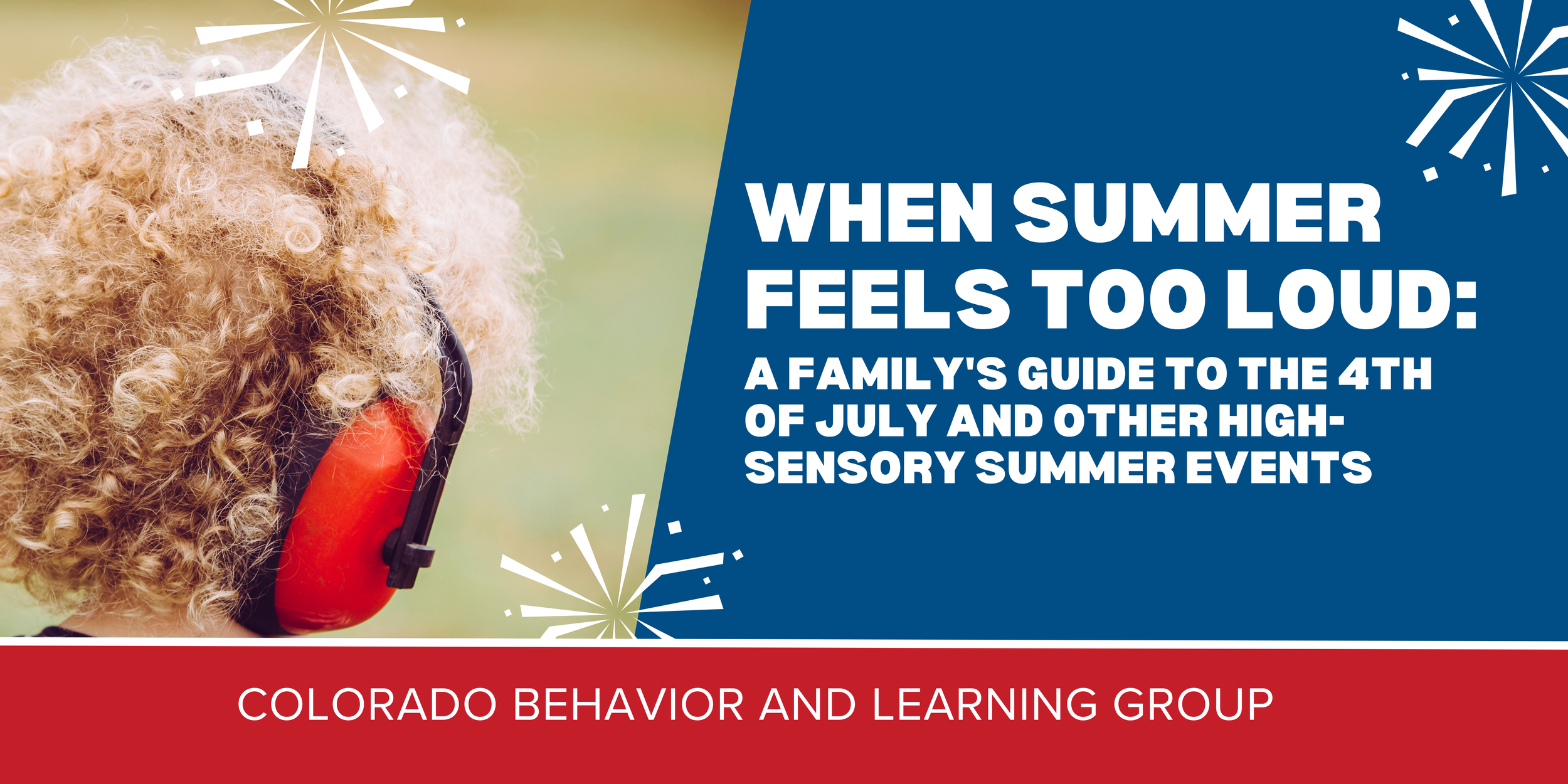
When Summer Feels Too Loud: A Family's Guide to the 4th of July and Other High-Sensory Summer Events
Summer is supposed to be the fun season. Long days, neighborhood pools, family barbecues, parades, fireworks, county fairs, weddings, vacations. The Pinterest version is bright and easy.
For families raising a child with autism — especially one with sensory sensitivities or extreme behaviors — summer is something else entirely. It's the season of the highest highs and the hardest crashes. The events that are supposed to make memories often produce meltdowns. The holidays, meant to bring families together, often leave caregivers grieving in the bathroom while everyone else celebrates.
This guide is for those families. Below: how to think about high-sensory summer events, the 4th of July arc specifically, other tough events that come up across the season, and a permission slip to make any of them as small as you need.
Why High-Sensory Events Hit Differently
Big events are sensory events. They are loud, visually overwhelming, smelly (food, sunscreen, smoke, people), crowded, unpredictable, and they typically take place at the worst times of day for sensory regulation — late afternoons and evenings, after a long day, often outside the predictable daily routine.
For an autistic nervous system, this combination doesn't just feel "a lot." It often produces a real physiological stress response. The body reads the input as threat. Cortisol rises. Heart rate increases. The capacity for language, flexibility, and coping drops. What looks from the outside like a meltdown is, biologically, a nervous system that has run out of capacity to process what's being asked of it.
Understanding this matters because it shifts how we respond. We don't need to fix the child. We need to manage the environment, support the system, and protect recovery time. The strategies below are organized around exactly that.
The 5-Step Framework for Any Big Summer Event
Whether it's the 4th of July, a wedding, a county fair, a family reunion, or a concert in the park, the same framework applies. We call it the 5 Ps.
1. Predict
Anticipate the sensory load BEFORE you commit. Will there be fireworks, large crowds, unfamiliar food, loud music, late-night timing, big temperature swings, long lines, unpredictable transitions? Map the sensory landscape of the event before deciding whether and how to attend.
2. Prepare
Visual schedule of the day, including the event
Social story for younger learners ("At the parade, we will see…")
Sensory equipment packed and tested: noise-canceling headphones, sunglasses, fidgets, weighted lap pad if used, comfort items
Snacks and water that you know they will accept
PRN medications on hand if applicable
Plan B identified before you go — the exit, the quiet space, the way home
Briefing for any adults who will be around: "Here's what to expect, here's how to help"
3. Protect
During the event, your job is to protect the sensory system, not to push through. That means:
Time limits — you don't have to stay for the whole thing
Sensory breaks every 20–30 minutes if needed (quiet space, low input, cold water)
Lower expectations of "participation" — being present IS the participation
One adult is on duty as the dedicated child-watcher with no other task
Honor cues to leave. A child telling you they're done — verbally or behaviorally — is data
4. Process
In the hours after the event, sit with the experience together when your child is calm:
Talk about what happened (or don't, if they don't want to)
Validate hard feelings ("That was a LOT. You did so well.")
Note what worked and what didn't, for next time
Don't lecture about behavior that occurred while dysregulated
5. Recover
Plan the 2–4 days after a big event as RECOVERY DAYS. Reduced demands. Quieter routines. More flexibility around screens, food, and schedule. We call this the sensory hangover, and it's biological — not a behavior problem.
The 4th of July Arc: A 3-Week Plan
Of all the high-sensory summer events, the 4th of July is often the hardest. Fireworks are loud, unpredictable, and late at night, can start days in advance in many Colorado neighborhoods, and they're often combined with crowds, alcohol, late dinners, and overstimulated relatives. Plan accordingly.
3 weeks out: Build tolerance
Start watching fireworks videos on YouTube at low volume. Increase gradually over 2–3 weeks
Have your child wear noise-canceling headphones around the house. Normalize them before they're "crisis gear"
Talk through what fireworks are and when they're coming. Use pictures for younger learners
If you have a fireworks-sensitive pet, start their desensitization too (it affects the whole household)
2 weeks out: Choose your plan
Decide what kind of 4th you're having, and commit. Options include:
Home with quiet activities, white noise running, blackout curtains, and headphones available — interior room
Distant viewing — drive to a far-away vantage point in the car, where fireworks are visible but quieter
Skip entirely — head to a quieter neighborhood, mountain town, or stay home with a movie marathon
Modified attendance — attend a small backyard, leave by 8 pm, before fireworks start
Pre-teach the plan. "On the 4th, we will…" Talk through it daily.
1 week out: Tactical prep
Headphones charged. Tested. Backup batteries
Interior sleeping space prepared with white noise, blackout curtains, fan running
PRN medications confirmed, dosed appropriately, plan written down
Family briefed. Manage expectations of grandparents, siblings, neighbors NOW
Stock easy comfort foods for July 3, 4, and 5 — no one needs to cook on recovery days
July 3: Eve of
In many Colorado neighborhoods, illegal fireworks start tonight. Be ready. White noise on. Headphones available. Don't be caught off guard by a 9:47pm boom outside your child's bedroom window.
July 4: The Day
Keep the day's structure as normal as possible until evening
Eat dinner earlier than usual to avoid the dinner-meltdown overlap
Get your child into their planned space — interior room, headphones, white noise — BEFORE neighborhood fireworks start (often 8:30–9pm)
Stay with them. Calm presence > talking. This is co-regulation, not entertainment
Hold steady through the worst of it. Most neighborhood fireworks ease after 11pm
July 5 and 6: Recovery
Low demands. Low expectations. Low schedule
Expect dysregulation, stims returning, sleep disruption, and communication loss
This is sensory hangover. It's not regression
Treat it like the flu — rest, hydration, comfort, no agenda
Other Tough Summer Events, And How to Approach Them
Parades
Loud, crowded, unpredictable. Lots of waiting, sometimes for hours. Marching bands, sirens, fire trucks. Often hot and sunny.
Choose your viewing spot wisely — away from the route end (drum corps + finale fireworks) and away from emergency vehicles
Bring a folding chair, snacks, water, headphones, and shade
Plan to leave at any point. The exit IS the plan
Many smaller community parades are more manageable than big-city productions
County Fairs & Carnivals
Visually overwhelming, loud music, food smells, animal smells, lights, rides, lines, and late evening hours.
Go in the morning when crowds are thin and the lights aren't on
Pre-buy ride tickets to avoid lines
Have a list of 2–3 priorities, not the whole fair
Quiet break areas exist at most fairs — find them on the map BEFORE you arrive
Honor the time limit. 90 minutes well is better than 4 hours badly
Concerts in the Park / Outdoor Music Events
Often more manageable than indoor venues, open space dissipates sound.
Sit on the perimeter, near an exit path
Bring a blanket and quiet activities — your child doesn't have to engage with the music to enjoy being there
Arrive early when crowds are smaller, and acoustics aren't peaked
Leave when needed without apology
Family Reunions & Big Backyard Gatherings
Often the hardest events are those that involve the most social pressure — "family" weighs heavily, even when supportive.
Talk to the host in advance about your child's needs and a quiet space
Bring familiar food in case the menu won't work
Identify your exit strategy and your transportation BEFORE you arrive
Have a brief, firm script for nosy family: "This is what works for us"
Permission to leave early. Permission to skip. Permission to do you
Weddings
Long, formal, loud, food-anxious, late, full of strangers. One of the hardest events on the summer calendar.
RSVP for the ceremony OR the reception, not always both
Sit on the aisle near the back for easy exit
Stay at a hotel or Airbnb with a quiet space, not a relative's guest room
Hire a familiar respite worker for part of the event if possible
It is okay to bow out entirely. Send a thoughtful gift. The relationship survives
Vacations & Travel
A full guide on its own, but the short version:
Pre-teach the trip with photos, videos, and a visual itinerary
Stick close to baseline routine times for meals and sleep
Build in recovery days BETWEEN big activity days
Lower trip expectations. The goal is shared time, not a packed itinerary
Pack all sensory equipment, comfort items, and 3x the snacks you think you need
Permission to Make It Small
You have permission to make any summer event smaller. Quieter. Shorter. Skipped.
A small 4th is not a failed 4th. A skipped wedding is not a damaged relationship. A 45-minute fair visit instead of a four-hour one is still a fair visit. A backyard barbecue with just your immediate family is still a celebration.
The metric for summer is not how many events you survived. It is whether your family — your whole family, including the caregivers — made it through the season closer, more rested, and more whole than you started.
Make it small if you need to. We promise no one will remember in five years which fireworks display you watched. They will remember the year their parent finally let them stay home and watch a movie in headphones. They will remember the year you didn't push. They will remember the holiday you protected.
After: The Importance of Recovery
If we could only choose ONE message for families navigating high-sensory summer events, it would be this: plan the recovery.
Most autism families plan the event meticulously and then are blindsided by the 2–4 days of dysregulation, sleep disruption, behavior escalation, and communication loss that follow. The result is exhaustion compounded by confusion: "We did everything right, why is it still so hard?"
Because the nervous system needs days to recover from what the body experienced as stress. Period.
Build in:
Cleared calendars for 48–72 hours after a major event
Quiet, predictable routines
Reduced demands across the board
More screen time than usual, with no guilt
Comfort food, comfort objects, comfort routines
A respite plan for the caregivers — YOU need recovery too
Plan the recovery as carefully as you planned the event. Then your family actually gets the benefit of the celebration, instead of paying for it for two weeks.
If Summer Has Been Hard, We're Here
If summer behaviors are getting bigger than you can manage at home — or you're realizing that next summer, you need more support around big events and the recovery that follows, please reach out. All of our clinics in Colorado Springs and Parker, Colorado, specialize in supporting children and teens with significant behavioral and sensory support needs, with current openings.
We can also help with back-to-school transition planning, IEP coordination, and behavior plan alignment, the work that should start now, not in September.
Call us, message us, or schedule a tour on our website. We answer.
About CBLG: Colorado Behavior and Learning Group is a Colorado-based provider of ABA therapy serving individuals and families across the Front Range. We provide pediatric services at our Parker (16 and under), Federal Drive, and other Denver-area locations, and adult ABA at our Zebulon Clinic in Colorado Springs (21+, Tricare accepted). All programming is assent-based, BCBA-supervised, and built around the lives the families we serve actually want to live.